
Pezeshkian gained the attention of people for his stance against the crackdown on the 2009 pro-democracy protests and the violence perpetrated by the notorious morality police in 2022 after Mahsa Amini's death.

Iranian President Masoud Pezeshkian declared that Iran will not succumb to "bullying" from the US and Israel, vowing to protect national interests amidst escalating West Asian hostilities. During his visit to New Delhi for the BRICS summit, Pezeshkian also discussed strengthening bilateral ties with Prime Minister Narendra Modi and advocated for local currencies in BRICS trade, positioning Iran as a strategic energy and transport partner.

Prime Minister Narendra Modi hosted Iranian President Masoud Pezeshkian in New Delhi for talks focusing on the West Asia situation, bilateral relations, and BRICS cooperation. The meeting, Pezeshkian's first visit to India as president, comes amidst heightened tensions in West Asia due to new US sanctions on Iran and concerns over global oil supplies from the Strait of Hormuz. Both leaders emphasised regional stability and economic resilience.

Iranian President Masoud Pezeshkian arrived in New Delhi for the BRICS summit, where he is scheduled to hold bilateral talks with Prime Minister Narendra Modi to enhance trade and strengthen overall relations. His visit is particularly significant given the heightened tensions in West Asia and recent US economic sanctions against Iran. Pezeshkian highlighted BRICS' role in fostering economic resilience and reducing dependence on the US dollar, while the summit itself aims to address global challenges and bolster collective resilience in critical sectors.

Pakistan's army chief held a series of engagements with Iranian leaders in Tehran as regional diplomacy remained in focus.

Iranian President Masoud Pezeshkian delivered a strong address at the UN General Assembly, rejecting US allegations against Iran and accusing Washington and Israel of aggression and terrorism. He criticised US sanctions, defended Iran's peaceful nuclear programme, and highlighted the Palestinian issue.

Iranian President Masoud Pezeshkian urged BRICS nations to expand trade in national currencies and build an inclusive global economic framework. He criticised "unilateral sanctions" by Western powers, stating they make emerging economies vulnerable and impact global food security. Pezeshkian emphasised BRICS' role in creating a balanced world order and highlighted Iran's geopolitical and energy capacities for cooperation.

Prime Minister Narendra Modi met Iranian President Masoud Pezeshkian at the SCO summit, advocating for dialogue and diplomacy to resolve the West Asia conflict and expressing India's desire to expand and diversify trade with Iran. Pezeshkian, in turn, urged India to leverage its contacts to promote peace.

India is hosting the 18th BRICS Summit in New Delhi, bringing together numerous world leaders including presidents from China, Russia, South Africa, Iran, and Egypt, along with prime ministers and foreign ministers from other nations. The summit will feature bilateral talks and highlights the expanded BRICS grouping's growing global influence and India's significant role as a founding member and current chair.

India successfully facilitated a significant diplomatic meeting between Iranian President Masoud Pezeshkian and UAE Crown Prince Sheikh Khaled bin Mohamed bin Zayed Al Nahyan on the sidelines of the BRICS Summit in New Delhi. This interaction, a diplomatic breakthrough given ongoing West Asia conflicts, occurred as BRICS adopted a declaration urging restraint and protection of civilians in the region, highlighting the bloc's commitment to peace and stability.

Iranian President Masoud Pezeshkian concluded his visit to India for the 18th BRICS Summit, announcing that Iran and the UAE agreed to move past previous tensions. This diplomatic breakthrough occurred during talks with Abu Dhabi's Crown Prince on the summit sidelines. Pezeshkian also met with PM Modi to discuss bilateral ties and West Asia developments, with Modi emphasising dialogue for regional peace. The BRICS summit adopted the New Delhi Declaration 2026, calling for global governance reforms and de-escalation in West Asia.

On September 18, 2026, Tehran witnessed a large military march featuring the feared-by-Iranian civilians Basij militia. Female members carried missile mockups and banners while coffins with images of US President Donald John Trump and Israeli Prime Minister Benjamin Netanyahu were displayed.

The Indian prime minister has been invited by President Pezeshkian to the burial ceremonies, the diplomatic sources said.

Iranian President Masoud Pezeshkian is on a state visit to Pakistan to discuss the full implementation of an agreement signed between Iran and the US, alongside regional and international developments. The visit also aims to strengthen bilateral cooperation across various sectors, following recent high-level talks between the US and Iran in Switzerland regarding regional security.

Iran's Fars News has released archival footage of Supreme Leader Ayatollah Mojtaba Khamenei, reportedly filmed before he assumed the leadership, amidst ongoing speculation about his health and whereabouts. This marks the second video release in August, following an earlier undated video from Mehr News agency aiming to counter claims of his critical condition.

Prime Minister Narendra Modi spoke with Iranian President Masoud Pezeshkian to discuss the escalating tensions in West Asia, emphasising the safety of Indian nationals and the need for regional stability through dialogue and diplomacy.

The 18th BRICS Summit got underway in New Delhi with leaders of partner countries gathering in the capital to discuss the changing global economic and geopolitical landscape.

Indian benchmark indices Sensex and Nifty opened higher, extending gains from the previous session, driven by a rally in global markets and a slight cooling in crude oil prices. Optimism around a potential meeting between US and Iranian presidents also contributed to positive sentiment.Later both indices pared gains and were trading in red. Track Sensex, Nifty on September 22.
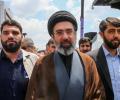
Reports have surfaced in Israeli media claiming that Iranian supreme leader Mojtaba Khamenei is in critical condition and has been rushed to a hospital.
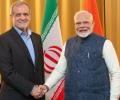
Prime Minister Narendra Modi held a telephonic conversation with Iranian President Masoud Pezeshkian, discussing recent developments in West Asia and reiterating India's emphasis on the importance of freedom of navigation in the Strait of Hormuz. Modi welcomed the recent peace understanding between the US and Iran, stressing dialogue and diplomacy for regional stability. India will also send representatives to the burial ceremonies of Iran's late Supreme Leader.

A Kishore Kumar song, a birthday cake, a prince's break from protocol to thank his driver, a Persian painting on the ceiling of the presidential residence -- the BRICS Summit had many memorable moments.

US President Donald Trump has expressed interest to his advisers in setting up a meeting with Iranian officials present in New York for the UN General Assembly's 81st session, "if the conditions are right."

The United States and Iran are scheduled to hold their initial round of talks in Switzerland on Friday, following a ceasefire agreement virtually signed by US President Donald Trump and Iranian President Masoud Pezeshkian.

Iran has extended an invitation to Congress president Mallikarjun Kharge and other party leaders, including Salman Khurshid and Pawan Khera, to attend the burial ceremonies of its late supreme leader Ayatollah Ali Khamenei. The ceremonies are scheduled from July 5 to 9 across various Iranian cities. India will also be represented by Minister of State for External Affairs Pabitra Margherita and Bihar Governor Ata Hasnain.

Iran's Khatam al-Anbiya Central Headquarters has threatened "continuous, effective and painful" attacks on US bases and interests across the region if Washington resumes military action against Tehran, amid escalating tensions and a US naval blockade on Iranian ports.

Reports from the New York Post, citing Mohsen Heydari, reveal that Mojtaba Khamenei was "pulled from the rubble" of a Tehran hospital after alleged US and Israeli strikes. This occurred before his secret selection as Iran's new Supreme Leader by the Assembly of Experts, which was also reportedly targeted. Conflicting accounts from Donald Trump and Iranian President Masoud Pezeshkian have further shrouded Khamenei's health in mystery, with some suggesting severe injuries while others claim he is "completely" healthy.

Pezeshkian urged American citizens to look beyond 'manufactured narratives', claiming the portrayal of Iran as a threat is driven by the military-industrial complex and Israeli political interests.

United States President Donald Trump and Iranian President Masoud Pezeshkian have virtually signed a 14-point memorandum of understanding (MoU) to end hostilities, reopen the Strait of Hormuz, and begin a 60-day negotiation process on sanctions and Iran's nuclear programme.

US Vice President JD Vance has postponed his visit to Switzerland for technical talks with Iranian negotiators, citing logistical issues. These negotiations are crucial for finalising the details of a recently signed peace deal between the US and Iran, which aims to end the conflict in West Asia and includes a 60-day period for technical discussions.

New Delhi was told it had given something up; in reality it had stopped talking about it, notes Dr Abhishek Puri.

Prime Minister Narendra Modi spoke with Iranian President Masoud Pezeshkian, condemning attacks on critical infrastructure in West Asia and emphasising the importance of safeguarding freedom of navigation and ensuring secure shipping lanes.

On Sunday, November 2, 2025, Iranian President Masoud Pezeshkian visited the Atomic Energy Organisation of Iran headquarters in Tehran, underscoring his administration's focus on advancing the country's nuclear technology for peaceful purposes.

Iran on Thursday spelled out three conditions to end the war with Israel and the United States, which entered its thirteenth day today. Taking to X, Iran's President Masoud Pezeshkian said he reaffirmed the country's commitment to peace during talks with leaders of Russia and Pakistan.

Iranian President Masoud Pezeshkian described Israel's incursions into Lebanon as a blatant breach of the ceasefire and said the continued attacks reflect deception and a lack of commitment to potential agreements.

Iranian President Masoud Pezeshkian stated that Iran is considering various paths to address regional tensions, including negotiations conducted with dignity and authority, while emphasising that military gains should be reinforced through diplomacy.

Pakistan Prime Minister Shehbaz Sharif on Thursday signed the historic peace deal between the United States and Iran as a guarantor; the agreement will see the immediate reopening of the Strait of Hormuz and the lifting of the US naval blockade.

Iranian President Masoud Pezeshkian has confirmed Tehran's participation in Pakistan-facilitated peace talks with the US in Islamabad, according to Prime Minister Shehbaz Sharif. This development follows a conditional ceasefire agreement and aims to address regional tensions.

The Ministry of External Affairs (MEA) has issued a warning against 'malicious' and 'misleading' social media posts concerning the health of world leaders, specifically Chinese President Xi Jinping and South African President Cyril Ramaphosa, who attended the recent BRICS Summit in New Delhi. The warning comes amidst unverified claims about Xi's health and an official statement from Ramaphosa's office confirming his withdrawal from public engagements due to ill health.

On Doctors' Day this week let's turn the spotlight onto doctors who decided to become leaders.

Chinese President Xi Jinping notably skipped a gala dinner hosted by Prime Minister Narendra Modi for BRICS leaders and other dignitaries, with sources suggesting he returned to his hotel to rest. Meanwhile, a grand cultural performance, 'BRICS Symphony - One Rhythm, Many Cultures', featuring artistes from member countries, was a highlight of the evening.
